

I had an essay prepared for early January, written and ready to go, but it no longer feels right for this moment. It leans too heavily on I—on my own interiority—and that feels out of place now, when we’ve been forced to listen to a bully openly declare the shape of American imperialism going forward, no longer even cloaked in the familiar language of human rights or democracy. I’m setting that piece aside for now and will return to it later.
Instead, I want to write about art, and about what it means to come together as witnesses — as people willing to hold space for one another in times when the news feels unbearable and the weight of all the history that’s come before gets lodged in the chest, and makes a lump in the throat which only dislodges with tears.
On the weekend, my husband and I went into Vancouver to attend a screening of Inside Llewyn Davis, accompanied by live musical performances. We didn’t end up staying to see the film in the end, it wasn’t what we’d really come to see.
The afternoon opened with a performance by an old friend of mine, Rodney DeCroo. We go back a long way — to the 1990s, to the heyday of activism on Vancouver’s Commercial Drive, to shared protests and a time when we could almost imagine that collective action would bend the arc of things to come. For a while after his marriage broke down, Rodney even came to live in my little activist duplex on Kitchener Street, sleeping on our couch among dirty towels and leftover dishes from potluck suppers.
Rodney began with a song about his father, a man drafted into the Vietnam War, a fact that shaped the rest of his life, and in turn the life of the son who came after him. The war left his father with wounds we’ve since learned to name, though they were rarely spoken of at the time. Alcoholism and PTSD marked him until his last days. Before starting the song, Rodney spoke briefly about what had happened the day before: about Venezuela, about the United States once again forcing itself into another country’s affairs, about the familiar pattern of intervention cloaked in moral language while driven by the greed of robber barons. His voice was raw; his hands shook with the outrage of it.
Of course it was emotionally overwhelming, and when he began to sing, he couldn’t get through the song no matter which way he tried it. Three times started. Each attempt ended with him stopping short, overcome. It was too close to the bone, too much history folding in on itself at once. His father’s war, the protests we fought against US oil imperialism thirty years ago, another looming conflict. Repeat. Repeat.
Rodney apologized to the audience, but he didn’t need to. The room was with him. You could palpably feel the sympathy with our performer’s anger and frustration, that he was merely channeling what the rest of us were feeling. He had simply stepped forward far enough to give it voice.
In that moment, I was reminded of another performance, from early in 2025 when I attended a concert by Leslie Dala, who was performing Philip Glass’s Études, Book 1 as part of a show marking the composer’s birthday: 88 Years, 88 Keys. The date was January 31st. Canada was on the brink of launching counter-tariffs against the United States. A defensive move, certainly not as dramatic as war, but significant nonetheless given the newness of the terrain being rolled out by the terrible child down South.
The concert itself was not political. The music was precise and demanding, executed luminously to a packed rehearsal hall in the east side of Vancouver. But at the end of the performance, during the talkback, Dala spoke briefly about the moment we were living in — about uncertainty, about risk, and about the difficulty of taking principled action when the consequences were unclear. He did not make a dramatic pronouncement, or declaim the United States. It was just an acknowledgement of the date and the times we found ourselves in. The questions that made the audience restless as they entered the room that night.
At Dala’s words, it felt as though the audience collectively exhaled. Almost audible - an energetic release that happens when someone names out loud what everyone is holding in, their breath tight in their throats. While the music that evening was extraordinary, it is that moment of collective witnessing that stuck with me: the relief at not being alone with our fear.
Rodney’s performance on Sunday was similar for me. It’s what I will remember a year from now when I think about going to the event. Not all the great songs that were played - but the one that wasn’t played and why.
Over the last week I’ve been reading an early novel by Olga Tokarczuk, House of Day, House of Night, recently reprinted. It is a fragmented book, built from small stories and observations, set in a hamlet in Poland near the border with what was once Czechoslovakia. Tokarczuk often writes from borderlands — geographic, historical, psychological — and this book is no exception.
The novel traces a place through centuries of change: shifting borders, wars, religious movements, renamed towns. At one point the region belongs to Germany; the place names are altered. After the war, people return, but the names do not revert — they change again, becoming something new. Identity is unstable. Belonging is transitory.
Within this frame are dozens of smaller tales: a man who dies on the border and whose body is pushed from one side to the other so no one has to deal with the paperwork; a man who survives wartime starvation by eating human flesh and later becomes a werewolf; knife-makers with a strange and insular religion. Marginal saints, outcasts, oddities. Lives shaped by forces far beyond individual control.
What has stayed with me is not just Tokarczuk’s imagination, or her capacity to collect and fabricate the mythologies into a much grander story, but what’s at the root of all her work. The human characters, fragile and resilient. Subject to injustice. Capable of beauty. Marked by death and mystery. Continually reshaped by political decisions made elsewhere, often without regard for the people who must live with their consequences.
And yet — her people persist. They tell stories about their neighbours. They gather to watch the comet arrive. They make meaning out of the seasons that come and go.
That, I think, is the throughline between Tokarczuk’s borderland, Rodney’s unfinished song, Leslie Dala’s remarks, and the audiences who show up for these moments. I am stabilized in these acts of collective witnessing.
As I said to my friend Sharon on the weekend, the only reason I ever go to anti-war protests is to be around thousands of other people who feel, as I do, that the violence must stop. To be unified in witnessing and speaking out against the growing darkness on this part of the globe or another.
We live in a time when the scale of events is overwhelming, as I’m sure it did for the Poles displaced and arrested at the start of Hitler’s wars. Countries as pieces on a game board delivering power into the hands of the few.
And while there may be little we can do right now, there is the act of witnessing. Art is one way we do that — to feel, not just to know; to experience collectively, so we are not alone in our grief, anger, fear, and the small shreds of hope that remain.
There’s an Ethan Hawke video floating around in which he says,
Most people don’t spend a lot of time thinking about poetry, they have a life to live and they’re not really concerned with Allen Ginsberg’s poems or anybody’s poems. Until... their father dies, you go to a funeral, you lose a child, somebody breaks your heart, they don’t love you any more and all of a sudden you’re desperate for making sense out of this life and “has anybody felt this bad before, how did they come out of this cloud?”
Or the inverse, something great. You meet somebody and your heart explodes, you love them so much you can’t even see straight ... and that’s when art’s not a luxury, it’s sustenance.
In moments like these — politically volatile, morally disorienting, emotionally charged — creative work is one of the places we can go to remember what it’s like to be a human in community with other humans. Not as an escape, but as a grounding place.
Rodney couldn’t finish his song. Leslie didn’t offer solutions. Tokarczuk doesn’t turn history into a moral fable. And yet, each of these moments of listening, of reading, offered something essential: the permission to witness without pretending that everything is fine.
I’m here for it. For continuing to build the works that bind us together; for making space for artists, musicians, and thinkers to gather on the deck at Birdsong in the summertime, to raise a glass and curse the war. For throwing my lot in with those who must fight, and with those who remain at home, bolstering one another through acts of care, attention, and witness — trying, in inhuman times, to stay human and whole.
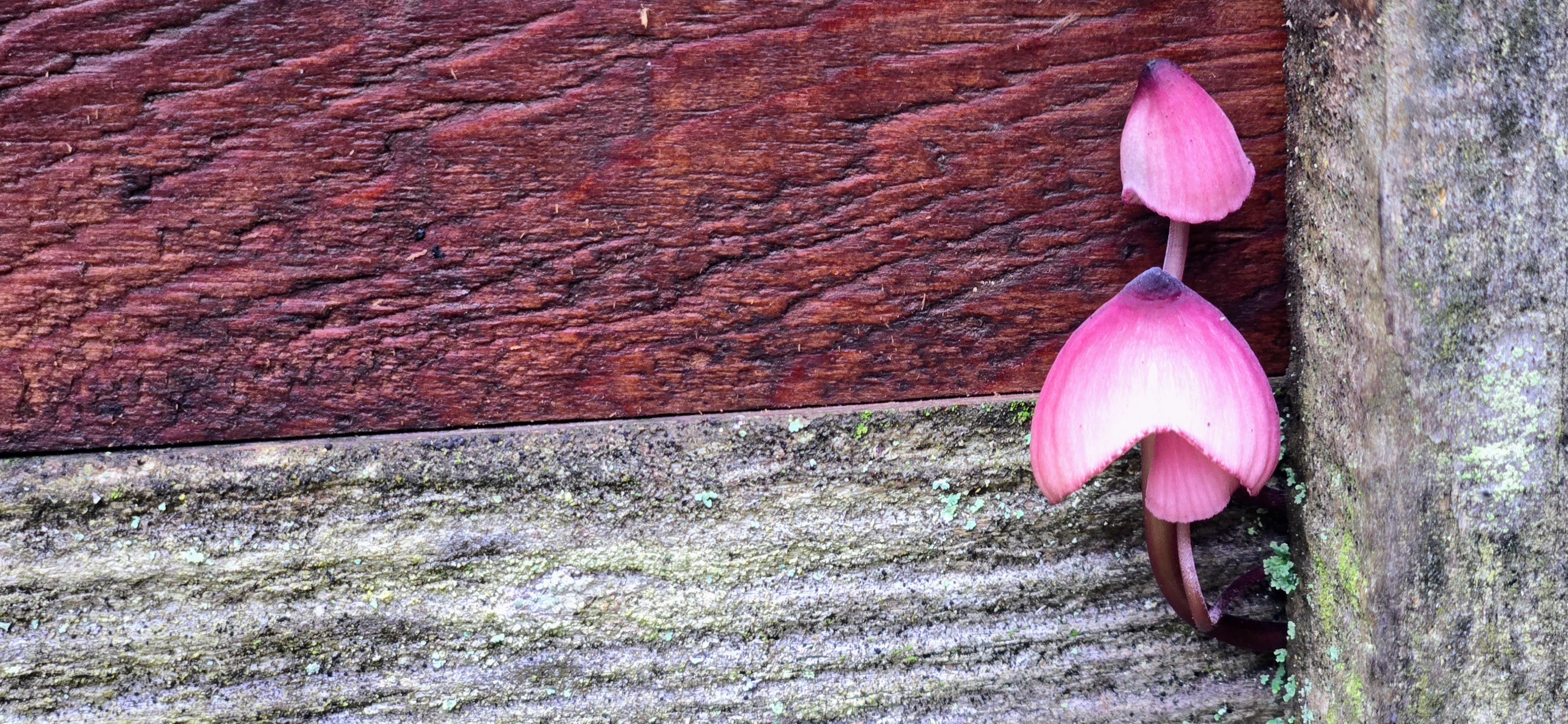
January recipe: Roasted potato tzatziki bowls
This is not my recipe. It came from Eating Well and I hope they don’t come after me for sharing it here. This is so nourishing and tasty, perfect post-holiday comfort food. There are a few steps, but it’s really easy and so worth it. Serves 4.
Ingredients
1½ pounds baby gold potatoes, halved
6 tablespoons extra-virgin olive oil, divided
1 teaspoon salt, divided
½ teaspoon ground pepper
1 large English cucumber, halved crosswise and divided
1¼ cups whole-milk plain strained (Greek-style) yogurt
2 tablespoons lemon juice
2 teaspoons finely chopped fresh dill, plus more for garnish
1 teaspoon finely chopped fresh mint
2 medium cloves garlic, grated (½ teaspoon)
1 (15-ounce) can no-salt-added chickpeas, rinsed
1 cup cherry tomatoes, halved (from 1 pint)
½ cup thinly sliced red onion
Directions
Preheat oven to 450°F with a baking sheet positioned on the center rack. Place halved potatoes in a large bowl. Add 2 tablespoons oil, ½ teaspoon salt and ½ teaspoon pepper; toss to coat. Pour onto the preheated baking sheet and carefully spread into an even layer. (Do not wash the bowl.) Roast until golden brown and tender, about 35 minutes. Remove from oven and let cool on baking sheet.
Meanwhile, grate 1 cucumber half on the large holes of a box grater; place on a clean kitchen towel and squeeze over the sink to remove excess liquid. Place in a separate medium bowl and add 1¼ cups yogurt, 2 tablespoons lemon juice, 1 tablespoon oil, 2 teaspoons dill, 1 teaspoon mint, the grated garlic and ¼ teaspoon salt; stir to combine.
Chop the remaining cucumber half; place in the empty reserved bowl. Add rinsed chickpeas, halved tomatoes, ½ cup red onion, 2 tablespoons oil and the remaining ¼ teaspoon salt; toss to coat.
Spread the yogurt mixture in 4 shallow bowls. Top with the roasted potatoes and the chickpea mixture. Drizzle the bowls with the remaining 1 tablespoon oil. Garnish with dill, if desired.
In the studio
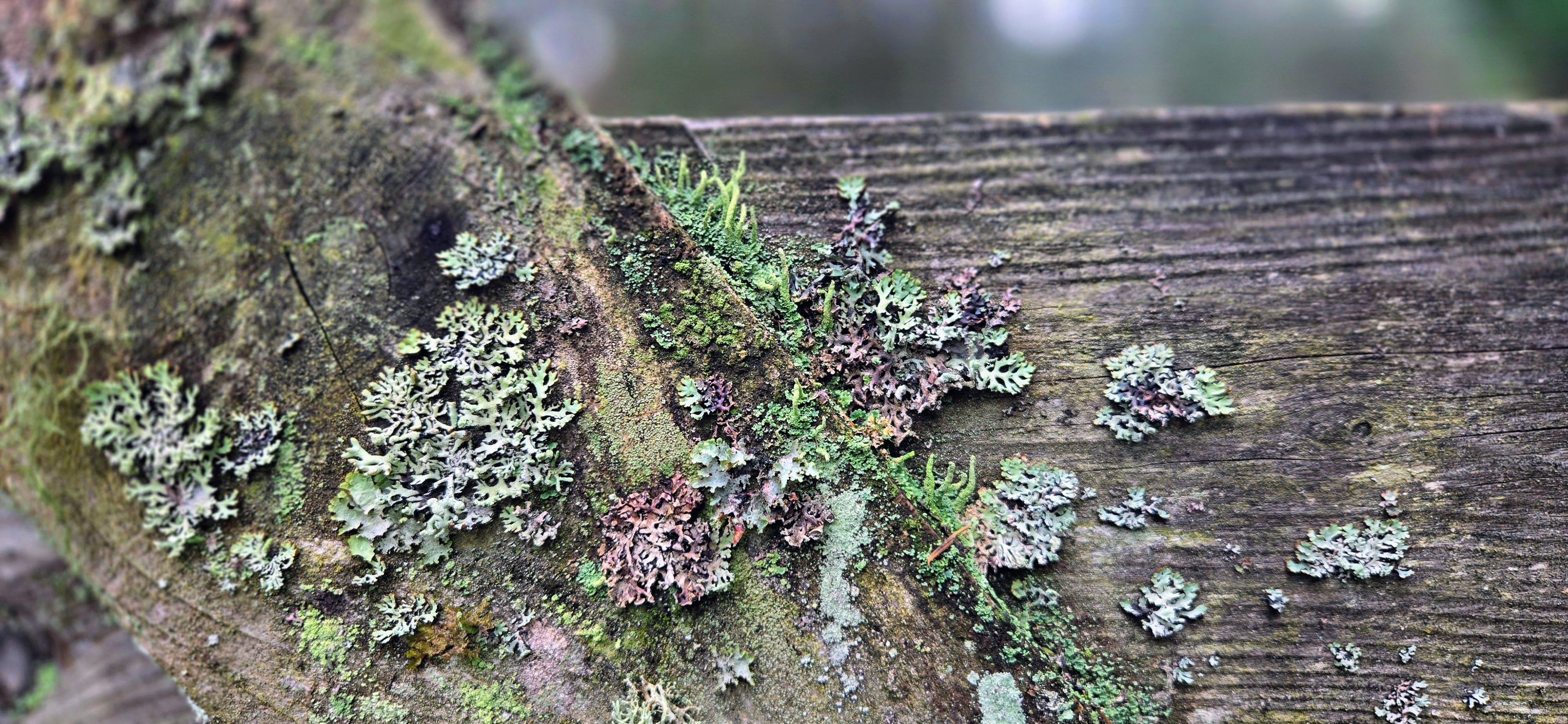
There is nothing really going on in my studio at the moment, so here is a picture of the lichen growing on my dying gate. Next year we will have to replace these gates, but at the moment they are growing the most beautiful life.
And speaking of lichen, during the holidays I collected a ton of windfall lobaria pulmonaria during a walk with my dad. It’s a beautiful lichen that can be used to dye fabric a brown shade, though you do have to use quite a lot to get much colour out of it. That is currently drying in my studio, though it isn’t very photo worthy.
Three things
Looking at US Imperialism Through the Lens of Liberation Theology: My husband and in-laws were liberation theologists who spent much time in the Latin America targeted by the US in the 1980s and 90s, and this week’s episode of US world domination has been reminiscent for them of struggles past. I very much appreciate this liberation theology take and suggested readings on the situation on Venezuela. Skip it if you aren’t in the mood for religious references.
Rest is Resistance: A Manifesto by Tricia Hersey. Despite all the new year energy hype, January is traditionally a month of rest (as this essay so eloquently argues), a time in deep winter when our fields are fallow and the larder is close to bare. If you are struggling to “justify” rest in your life, I encourage you to read Hersey’s manifesto which argues that rest is not withdrawal but refusal, and a way of reclaiming our humanity in the grind culture built on exhaustion.
On the Calculation of Volume I by Solvej Balle. There will eventually be seven volumes comprising this fiction series, but I have only read the first one so far and it is a curious work. Set on a single day, repeated over and over, the protagonist Tara Selter, attempts to figure out why she has become stuck in time (when no one else has) and how she might become unstuck. Very little actually happens in the novel, as is to be expected since November the 18th isn’t a particularly eventful day for Tara or those around her, but the writing carries a quiet and hypnotic effect, and ultimately is a meditation on what makes the essence of our days and our life. This is perfect wintertime reading. Six volumes have been released in Danish, with only three currently available in English (I’ve got the next two on order).
And finally….
I said it on Facebook and I’ll say it here: Yes, the world is a bit of a shitshow right now. But I am still beyond grateful to be on this spinning ball, making plans and dreams, hanging out with the folks that I love. Thanks for sharing this space with me.
If you get this by email and enjoy it, it really helps if click through to the web home for this newsletter and click the heart button - there’s also a place to make comments and I love the engagement.
Other places you can find me online includes my blog at http://red-cedar.ca where I post less formally about my life once or twice a week.
Happy New Year everyone!
I went down a rabbit hole via Oliver Burkeman, via Austin Kleon and discovered you. Drive Your Plow is my current favorite book so I knew you were a kindred spirit! I love your outlook and appreciate the recipe. Thank you; will be tuning in and sharing.
Thanks so much for this post. I love your comments on witnessing, song, poetry, and art in general. The lichen photo is beautiful too!